Thursday, June 2, 2011

Option 2


Nick and I challenged the marginalized norms of the golf course by not paying to play and throwing a football on the property. We were there for almost a half hour and no one stopped us. We actually received friendly gestures from the golfers. This was actually slightly surprising, however, this course is more casual and relaxed than others. Also, the location of being close to Ping and right next to the bike path probably causes many people to walk on the property who are not there to play. I wasn't abel to draw much from the readings about this because I assume we should have been asked to leave. We did not pay and were not using it for its right intent. Mitchel would not have defined it as a public space but instead a pseudo-public space. However, we were treating it like a public space and nothing happened.

Planned Public Space


Website article explaining new design, funding, and costs

From observation, I could tell this site has been strategically planned. It is located right next to Ping, the bike path, and a freeway as shown by the pictures. This indicates a location that is visible and walkable for members of the OU community. The bunkers, fairways, and greens are built to specific specifications on the property. There were 9 holes with a flag in them. There is a shop where you go to pay to play or buy golf equipment. All of this indicates a pseudo-public space.

Wednesday, June 1, 2011

Representation of Space

Golf courses can be seen as a fairly simple, just some grass, some trees, some water, some sand, and a hole where a ball goes. However much of the public does not take into account the amount of work and preparation that goes into creating a golf course. Courses are typically designed by a specially trained architect and then the head greens keepers must have a strong background in agriculture/botany in order to know how to properly keep the grass well groomed. Many times the courses are manicured in the early morning before the first person tees off.

Like stated before people must pay in order to gain access to golf courses, therefore they want their golfing experience to be up to par. This often times means that the players will enforce rules/norms with other people playing in order to maintain the sanctity of the game. Some examples of this would be raking the sand after your ball goes in it, letting faster players play through, and repairing ball marks on the greens. However if there are no other players on the course to enforce these rules there is sometimes a course ranger to patrol the course looking to end any sources of hooliganism. What seems as a very simple game holds many deeper meanings within it that unless you are a casual player of the game you would be blind to it.

By Alan Miller

Place as "representational space"

Mitchell says that representational space is appropriated, lived space; space-in-use. This can also be referred to as how the space is actually used. Three ways in which the golf course is representational space are for golf outings, a place for students to commit acts of defiance, and just for golfing on a day to day basis.

Golf outings are a good way to raise money for a specific purpose. Usually what happens is teams of four sign up to play and pay an entry fee, most of the time it is around $60 a person. Each person from the team hits from the same spot. The team then chooses which of the four balls to use and then they all hit from that spot and the process is repeated. The course is full of these teams and the space is used like this in order to raise the money.

Students use the course as a place to drink and smoke marijuana. This obviously isn't an intent of the space itself, but it still happens. I have heard many stories from people I know who do this on a regular basis. The reason for this could be for the sole purpose of breaking rules and doing something a little risky. Since it is on the edge of campus, usually the people who use the space in this manner live in the dorms located beside the course.

Finally, the course is used for its actual intent. Students, faculty members, and people from the community can pay to play golf on the course. Right now the course stays relatively busy, especially in the evening when it isnt so hot. The space itself is used only for golfing and if someone were to use it for something else, many of the golfers would view that as impeding on those who pay to play.

Ohio University Golf Course as a "Representational Space"

The Ohio University Golf Course is a place that is used for the basic purpose of playing the game of golf. The users of the course are mainly Ohio University students and Alumni but is also used by others visiting the golf course. The users of the course support the purpose of the course by playing the game as the course is designed. Playing each hole in order of how the course is laid out. The course is a nine hole course, and par is 35. The activities include general recreation, golf tournaments, leagues, and private lessons. The course is also used for furthering the knowledge of those pursuing careers in sports management and other majors concerning the game of golf.
The golf course therefore serves a small amount of the university students, those interested in the game of golf. The public absent from this space are those who do not play golf, which is a majority of the college students. You can also make the argument that those absent are those who cannot afford the green fees. These fees are less for Ohio University students but there is still a ten dollar fee during the week and twenty dollars on the weekend. Plus, if you want to rent a cart its an additional six dollars. When thinking about what is absent, you can look at the course and see that there is an absents of population and the use of the space. For how vast the space of the course there are relatively few people using the land at a given time.

Rep of Space vs Rep Space

Representation of space was discussed as meaning how a place was designed/intended to be used, representational space is how the area is actually used. When looking at the golf course, we found that more than often, the use of the course coincide with the intended use of the designers/Ohio University. Because it is a space for a specific type of recreation, it is dominated by that activity (Frisbee golf too).
There are accounts of use outside of the intention, but they typically go on during the night, when the area is closed. It is known that students in and around S Green are breaking the course rules, as well as the dormitory rules by sneaking out to the dark course for a few cold ones or to enjoy other recreational substances. Another way of using the place other than as intended was comments from people we talked to that have used the course and seen people foraging for balls so as to not have to pay the extra money for a sleeve.
The outcome of the behavior that deviates from the intention of the university is a groundskeeper and security that keep people off the fairways unless they are properly using the space.

Golf Course as a Representation of Space

Although it is public, people have to pay to play there, even students ($10 for 9holes without a cart, and low as $200 per quarter membership). The space is built for a specific purpose: to play golf, and so isn't completely public as Mitchell would say an area should be, but we believe there's room for both types of space, as long as they are fair and assessable.
As we found out, the space is only to be used for golfing. The website at ohio.edu says the place is also used to conduct tournaments, compete with other teams, and use for fund raising golf outings. We went and observed people playing there, using the space as intended.

Sunday, May 15, 2011

Examples from readings

Since our main goal is to make homeless more visible, we wanted to use some of the readings to back-up why we picked this. In "The Everyday Geography of the Homeless in Kansas City", the author Paul Rollinson makes a few points that support our mission. "Early in the 1980s, homelessness was viewed as a tragic and temporary aberration affecting the most vulnerable members of US society. Today, it appears that homelessness is not an aberration: 7.4% of all adult Americans have been on the streets or in a shelter at some time during their lives (Link et al., 1994)." This is an important claim because it highlights one reason as to why people sometimes overlook who actually make up the homeless population. Sometimes a person can be in a shelter for just periods of time, on and off again, and the public tend to not see this as not being homeless. Why? Because most of society tends to view a person being homeless only if they absolutely have no shelter at all, more of the extreme of homelessness. This is one major reason it gets overlooked.

More support comes from the article "Alternative Cartographies of Homelessness:Rendering visible British women's experiences of 'visible' homelessness"by Jon May, Paul Cloke, and Sarah Johnsen. "Constructions of homelessness move around a number of powerfully restrictive
tropes. In the popular imagination homelessness tends to be reduced to the experience of ‘visible’ homelessness or ‘rooflessness’ (May, 2003). Thus constructed, it may in turn come to be understood as mainly restricted to the urban realm and largely, if not wholly, a male preserve (Cloke et al., 2000; Higate, 2000a)." This is a very important notion because when it comes right down to it, many people think of the homeless as predominantly males. It's hard to picture a homeless woman, especially if she has kids. This is partially true because society doesn't want to admit that it happens in our country and by not admitting it then it's not a reality.

Our campaign would help out in making the situations, like the ones in the article, more visible. It can be clearly seen that many homeless are being overlooked. It would require society accepting that it is a real issue and needs to be dealt with. By highlighting the fact that there are more homeless than those of the extreme end, those without absolutely any shelter whatsoever, I think people would have a better understanding of how big of a problem it actually is. This is why we want to make it more visible to the public.

Saturday, May 14, 2011

Discussion of Examples and How Homelessness is Portrayed in Cultural “Artifacts”.

In our examples of how homelessness is portrayed in society we could see common themes through various types of media. Our examples of movies, documentaries, comedic television shows news articles and music give us a wide scope of how homelessness is portrayed. I think the main them to these portrayals of homeless is one that shows them as unequal and dehumanizes the homeless. In the article, "working without place", the author states, "homeless is also a term of disrespect for those who do not fit into a conception of home- who do not fit prevailing standards of housing, land tenure, family form and material comfort." In some of these examples we see the hardships the characters go through without having this place of "home". In these media examples we can see a a displacement of place and the adaptation to survive these conditions whether it be short term or long term. In these examples you also see the urban setting of homelessness which is discussed in the article "Alternative Cartographies of Homelessness: Rendering visible British women's experiences of 'visible' homelessness. The authors conclude, " In the popular imagination homelessness tends to be reduced to the experience of 'visible' homelessness or 'rooflessness'. Thus constructed, it may in turn come to be understood as mainly restricted to the urban realm..." In these portrayals you can see the economic hardships the in-turn lead to the loss of home and the individual struggle to redefine "home".
In some examples they relocate to shelters and others find a way to live on the streets temporarily before they can figure something out. In all these examples you can see the you can see a problem of an individual's struggle to recuperate instead of having structural support. I agree with the article " The Everyday Geography of the Homeless in Kansas City" as i conclude with this statement, " Faced with a problem that is unlikely to go a way in the near future, it is imperative that we begin to see the problem of homelessness not simply lacking a roof and to understand the context within which the experience of homelessness is embedded. Any lasting solutions to the problem must address the individual vulnerabilities and the structural causes of that problem." The problem lies in the structure in which homelessness is created not solely created by the individual.

Friday, May 13, 2011

10 Examples of Homelessness in Popular Culture

1. The Pursuit of Happiness (movie)

2. Dark Days (documentary)

3. Phil Collins-Another Day in Paradise (song)

4. The Soloist (movie)

5. South Park Episode (tv show)

6. The Real Face of Homelessness (Time article)
Article Link
7. A Night on the Streets (NY Magazine article)
Article Link
8. Made Homeless by Tornado, Alabama Victims Ponder Their Next Moves (LA Times Article)
Article Link
9. CBS-Teens Beating Homeless (news)

10. Trading Places (movie)

Readings and in class discussions

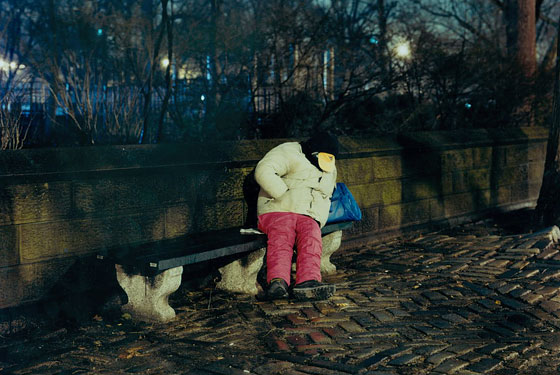
We are focusing on the 'invisibility' of homelessness, hoping that bringing the subject out of the taboo and into the mind's eye of the mainstream public will help motivate change and create a commitment to helping our societies displaced people.
In the Working With Place article the interview with the suburban woman was enlightening, they say that there are no homeless in their neighborhood because "we have a good, helpful community. If folks are in trouble we help them. All the undesireables keep to themselves or move away."
-This shows almost a sense of denial about the problem, as well as the popular mindset that homeless are 'undesireable" and that no homeless could come from a good, wholesome town.

Campaign for the Homeless

The goal of our public education campaign would be to shine a light on the 'invisibility' of homelessness. By reducing the invisibility factor we can bring this issue of homelessness closer to the mind of the everyday person in mainstream America, and hopefully that will lead to more initiative toward solving the problem.

We want to emphasize that the homeless are people too, they have a background and are just like me and you. The problem is that society tries to distance itself from the issue, as we hope to resolve that mindset by creating a public awareness campaign that coveys the message that one day it could be you, or someone you care deeply for. The television ad would show first a young woman or man graduating from high school or military training, and being showered with love and attention, then that same person in the next scene as a homeless and saddened individual being passed up and ignored by the people passing by, walking over him.

Our ad campaign would be accompanied by posters put up around college campuses and in downtown areas that show images of homeless life with the faces of the homeless being a blank white space - the message being that the "next time you look it could be the face of a loved one."
On the posters and after each TV ad we will post a phone number for people to call and donate, we will work with local shelters and proceeds will go to making these facilities better/more available to the range of people that are homeless, as well as generating job training and rehabilitation programs.

Our project's name is Humanizing the Homeless and our slogan is "Four Walls and a Roof are all that separate HOME from HOMELESS"


Identities, Meanings, Geographies of Homeless

Meaning: A person without permanent or nighttime residence.
Identities: Lack of control, sense of shame, seen as litter by those in the mainstream, often times issues with mental health or substance abuse. Disassociation from family and society, creating a feeling of alienation.
Geographies: Typically centrally located in large cities, away from public eyes such as under bridges or in alley ways. In rural and suburban settings homelessness is more hidden or invisible.

Wednesday, May 11, 2011

Identities, Meanings, and Geographies of Homelessness

Meaning: A person who is without a permanent or nighttime residence.
Identities: Lack of control, a sense of shame, seen as litter by those in the mainstream, often times there are issues of mental health and substance abuse.
-Disassociation from family and society, resulting in a feeling of alienation
Geographies: Typically in central areas of larger cities, away from public eye such as under bridges or in alleyways or secluded areas of public parks. In rural and suburban areas the homeless are more hidden both literally and in the minds of the community.

Campaign

Our goal with a public education campaign would be to shine a light on the 'invisibility' of homelessness. People tend not to want to think of the homeless and so they are marginalized to areas where they can be mostly unseen. We will also incude a number for people to call in and donate, with the proceeds going to local homeless shelters and centers of rehabilitation.

By making homelessness an issue that can be seen in the public forum and in a different light, we hope to create a hightened awareness of homelessness which can generate a willingness to help. By making the issue less 'invisible' we can make people reflect on how the homeless are people too, and should be seen as somoene who could be a loved one or even ourselves.
In class we talked about the Working with Place which talked about how homeless are seen as a lesser class of person or as "human litter"

An attitude like this would rather have the problem unseen that dealt with, and so it is the focus of change that needs to be made in society's view of homeless.

This can be seen not only in cities where people are forced out of sight under beidges or in abondoned lots, there is also a problem with invisibility in the suburbs. The same article includes an interview with someone from a rural community. The person exclaims there are no homeless in her town because they have a "good, helful community. If folks are in trouble we help them." She then goes on to say that all the 'undesireables' keep away. This links homelessness with being undesireable in the mainstream eye of society.

We feel that people need to look at the homeless in a different light, taking everything into considderation about how they are a person!

Description:
Our campaign would be a tv advertisement that shows that homeless people are human too. We would shine a light on where homeless people come from and that they could be a loved one or good friend. We hope to create an intimate view of homelessness so that poeple no longer want to distance from the problem, but want to get involved. We would show a soldier or a young person in an accepted situation recieving love and attention, then the same person only a short time afterwards being in a shelter or soup kitchen wondering what happened, and accepting a rock-bottom status in society.

10 Examples in which Homelessness is Portrayed in Cultural "Artifacts"

1. Dark Days-Documentary About NYC Homeless Living Underground


2. Trading Places-Eddie Murphy Movie


3. South Park Episode-Night of the Living Homeless


4. CBS News-Teens Beat Homeless


5. Pursuit of Happiness-Will Smith Movie


6. Time Article-The Real Face of Homelessness


source: http://img.timeinc.net/time/photoessays/homelessness/counselling.jpg


Time Article Link

7. NY Magazine Article-A Night on the Streets


source: http://images.nymag.com/news/features/homeless080324_7_560.jpg


NY Magazine Article Link

8. Phil Collins Song-Another Day In Paradise


9. The Soloist-Jamie Foxx Movie


10. LA Times Article-Made homeless by tornado, Alabama victims ponder their next moves


source: http://www.latimes.com/media/photo/2011-04/61273823.jpg


LA Times Article Link

Author: also Erik Smith

Monday, May 2, 2011

Summary

It can easily be seen how these three views react with one another. Being able to map aspects of Greek life, observe the class system that is created within the community, and the roles and norms of these people are all important to their identity. Sometimes it may be expected to act a certain way such as being elite which would then become a role and possibly a norm to all the Greek community. Also, a role is that they should maintain this class system because it gives them a sense of identity and to "one up" the rest of the student population in a way. As far as the empiricist view, by mapping these locations and knowing where they are, it also contributes to the Greek life identity because it is a familiar place where members of the same group gather and share common interests and beliefs.

Observation Through a Constructivist Lens


source:http://www.10tv.com/wwwexportcontent/sites/10tv/local/stories/2009/11/17/images/image_ou_280.jpg

As a member of a fraternity, Delta Tau Delta, I saw firsthand how norms of behavior were implemented. During rush my fraternity emphasized 'wild' parties with sororities the most. Thus, heavy drinking was immediately attributed to my fraternity's lifestyle. Although, we also were engaged in a limited amount of community service it was not something we mentioned too much in detail as well as anything about GPA expectations. I know the pledges we were looking for were athletic and 'cool' guys. Many of my fraternity brothers also wore certain brands of expensive clothes on the weekends such as Ralph Lauren, J. Crew, and Lacoste. By becoming a member you were accepted by a large group of people who threw large parties that girls attended. Hazing was implemented to get rid of weak individuals or guys who weren't committed as well as develop strength. An elitist view was emphasized when you became a Delt and were encouraged to display almost an overbearingness of confidence. At the time, we were considered a part of the 'big 3' on campus by some people, which also included Pike and Fiji. Other fraternities were considered inferior and sometimes altercations occurred. Subsequently, my fraternity was suspended for 5 years my junior year because of a hazing incident. A summary of the norms of behavior that were associated with my fraternity were partying, sports, 'gaming' with girls, while exuding a humorous and confident approach to life. On the other hand, school and volunteer work were of secondary importance. Through all of the partying, some members still managed to be admitted into graduate and law schools as well as on occasion medical school. Our overall GPA was about the average for Ohio University.

An article about Delta Tau Delta's suspension

Saturday, April 30, 2011


Life in a fraternity or sorority carries social, academic, networking, and leadership roles and implications. Our group looked at the geography of the 'greek life' identity through the three lenses of the empericist, constructivist, and critical theory approaches.


Empriricist

The empiricist approach would look to examine the identity is a quantifiable and tangible way, so as to map or graph and learn from concrete data. We see the empiricist geography of frats/sororities as being always located on campus, many times on a main road in campus and having multiple greek houses lined up in a row. Within these houses is a system of heirarchy that people adhere to. The houses only admit a certian number of people per year, and there are rules that everyone must pledge and adhere to as well.


Critical Theory

The critical theory approach tends to look at how a class system is created through processes in society and claims that when class is established, so is conflict among differing classes in relation to who has access to better resources and such. We looked at the way greek students network and become a part of a bigger structure that can help them gain contacts across the country. Not only is a class created out of this on campus where greek students hold claim to the best parties and hottest people, as well as those focused on academic advancement having a leg up in the educational political scene, but people also gain a leg-up in the real world when they are putting down thier fraternal/sorority experiences on a resume or being able to connect with people who share a background in greek life. There is also a conflict created between the accepted and the rejected, or people who want to see themselves as alligning with a certian group of 'desireable' people. This effect has its place in college campuses and the workforce all over the country.


Constructivist

The constructivist approach examines how society creates traits and roles that are seen as the norm and even naturally occuring. We see this as covering the stereotypes of greek life, some of which are true to certian situations, and some of which are unfairly applied to good people. Greek students are seen as the social elite among campus residents. They are the pretty, the rich, the privilaged, the fun-seekers, and the heavy drinkers. To be accepted into the greek indentity, there are certian ways of looking and behaving that must be conformed to the norm or one will not be accepted. Our group has two members who have first person experience with greek life, and they confirm that this is the case. There's a confidence that comes with being accepted that one must eminate in all endeavours.

Wednesday, April 13, 2011

RULES FOR THE BAR


  • Must be 21 years old (cCON)

  • Cannot serve yourself, must be served by bartenders (cCON)

  • Leave room for people playing pool (cPRO)

  • Types of drinks (gendered) (cAPP)

  • Cannot smoke inside (cwPRO)

  • Tip bartender (wCON)

  • Don't flirt with people in relationships (cPRO)

  • Choose age appropriate bars (cAPP)

  • Don't take advantage of others under the influence (cPRO)

  • Sports on televisions (cCON)

  • Guys buy the drinks for the girls (cCON)

  • Quarters go on the table if you want to have the next game of pool (cCON)

  • Wear appropriate clothing to the bar (cAPP)

  • Switch turns buying rounds (cCON)

  • Try to refrain from fighting (cPRO)

  • Don't do something you will regret in the morning (cPRO)

  • Make sure you have identification (cCON)

  • Make sure you have sufficient cash on hand (c-wCON)

  • know at least one other person at the bar (cAPP)

  • Don't yell or throw anything at the bartender (wPRO)

KEY


PRO = protection


CON = control


APP = apperance


c = customer


w = worker


Rules of place, roles of power: Bars

Who you are at the bar: what factors affect social norms in bar scene?

Some of the rules of place at the bar have backgrounds in power and identity concerning the conception and perpetuation of those rules. Social forces as well as internal forces work to adhere to social norms to create an unspoken way of conducting ones’ self appropriately with gender, age, and economic status.

When someone turns 21, our state and federal governments allow that person to legally drink alcohol. Turning 21 and legally being allowed to drink in a bar indicates a perceived final transition to adulthood. Interestingly enough, in our examined area of bars in Athens, the power shifted from the older members of society to younger college students. The laws laid out saying who can drink are mandated by an older generation, but in a college town bar – it’s the younger crowd that dominates and creates ‘rules’ in the establishment. A person of 30 or older would be noticed almost immediately in a busy bar on a busy night.

The bartender assumes a position of power identity in the bar scene. A patron is expected not to lean over the bar and serve themselves. The act of being served by the bartender is followed by the expectation of a tip for those services. The customer is what drives the business, however, they are expected to not only pay for the beverages, but tip regularly. Not doing so can make the person holding power choose to neglect the customer’s future orders.

The bar is a place many people go to socialize and flirt with someone of the opposite sex. There are rules that society creates that follow us into bars when interacting with someone of the opposite sex. People are expected to dress nicely and present themselves as best as possible. Typically, males are more assertive about pursuing girls, while females are typically less aggressive. Guys are also supposed to pay for the drinks. This is taken from ideals of male dominance in society as well as their higher status. Another thing people are aware of when dealing with what men/women are expected to do in a bar is what drink to order. It’s seen as more masculine to 'slam' shots, drink straight whiskey, or consume mega-mugs; while it’s seen as more feminine to drink things that are fruitful, made with clear liquor, or mixed and decorated drinks. Beer seems to span the gap between the two genders.

Typically, bars today have multiple flat screen TV's that run sport programs. We believe this is a representation of catering towards the men in the establishment, as they are seen to be the 'breadwinners', and the ones who should be paying for the drinks.

When it comes to choosing a bar, it’s not just the decor or type of drinks served that determine if it’s the right establishment. There are things like what type of attire worn, music played, and social crowds that populate the establishment. Here we believe socio-economic issues are implied. People who can afford to dress nicely, who want to hear rap music, and who’s main goal is to go home with a partner may go to a certain type of bar. On the other hand, people who want to just wear everyday clothes, relax with a few friends in an environment that’s not too loud or obnoxious may want to look for another place.

We discussed that girls are usually concerned with taking pictures and uploading them, for example, to Facebook so they can share them with their family and friends. I think this correlates to the social norm that women are more readily open and accessible when it comes to sharing and appreciating experiences with their friends. Men tend to put on fronts (‘I don’t care’ attitudes) and not seem so excited about simply enjoying their friend’s company in order to seem or remain tough and disconnected emotionally.

News Article

Bar closes over tax issues Reportedly stayed in biz for over two years while under suspensionBy Jordan Valinsky The Crystal, a popular uptown Athens bar, is closed indefinitely following a complaint that the bar has been selling alcohol under a suspended license since 2008. The bar, located at 34 N. Court St., was cited by the state Liquor Control Commission overnight Friday for sales of liquor and beer under a suspended license, said Julie Hinds, a public information officer for the Ohio Investigative Unit. The suspension was related to a tax issue from 2008. "We received a complaint, investigated it; [we] found out there was a suspension and cited [the bar]," said Hinds. No alcohol was seized, she added. Pepson Inc., the owner of The Crystal, cannot sell alcohol or beer until the permit is reinstated after the tax issues are cleared. The suspended license stems from an August 2008 violation for failing to pay excise taxes, according to Liquor Control Commission documents. The bar's owner, Donald E. Pepper, did not pay the Ohio Department of Taxation following the 2008 citation, and that department had the case transferred to the Ohio Attorney General's office, said Gary Gudmundson, a spokesperson for the tax department. He declined to comment on how much the bar owes. Though the Crystal's liquor license was then suspended indefinitely, how the bar continued to operate for three years after the suspension remains unclear. Pepper could not be reached for comment, though he was spotted entering the bar on Monday. Previous Problems This isn't the first time Pepson Inc. has run into troubles, according to Liquor Control Commission documents. Since 1991, Pepson Inc. has received 16 violations from the state. Seven violations are for selling alcohol to underage patrons and three for after-hours consumption and delivery. Five violations are for tax problems under House Bill 231, or commonly known as "Tax Non-Renewal." Liquor permit holders must be up to date on tax payments before their license is renewed. Management was late on payments in 1997, 1999, 2000 and 2001. The cases were dismissed following payment, according to documents. The final, and most recent, violation was filed Saturday, for selling alcohol under suspension and illegal possession/sale of beer. (Source athensnews.com)


This article demonstrates why we picked one of the main rules that we did and that is the noone under 21 rule. Avoiding any situation in which minors can enter takes away any chance that alcohol is served to them which could possibly lead to criminal charges against the establishment. This article explains that the Crystal received seven violations concerning sales to underage people. However, we chose to completely avoid this by only allowing people 21 years of age and older into the bar.